Electrolyte Development & Formulation
Reliable cell assembly for electrolyte research
Electrolyte development is often decided by differences that are easy to obscure and difficult to recover once they are lost.
A change in additive level, salt concentration, solvent system, or viscosity may alter coulombic efficiency, cycle life, interfacial stability, fast-charging behaviour, low-temperature performance, or safety. But in this kind of work, the primary variable is liquid formulation, and that makes the assembly process unusually sensitive. Small differences in dose, wetting behaviour, contamination, or air and moisture exposure can distort the result enough to make interpretation uncertain.
That is why electrolyte research demands especially tight process control at the point of cell assembly. The challenge is not simply to build the cell. It is to ensure that each formulation is delivered consistently enough that the resulting data can be trusted.
For teams working on electrolyte development, the key question is often whether a performance difference is real or whether it came from dosing error, contamination, or uncontrolled handling. Cellerate equipment is designed to remove that doubt and provide a more controlled, more traceable basis for formulation work.
Built for microlitre-level control
Manual electrolyte addition is one of the largest sources of variability in battery research, and that becomes especially clear in formulation work. Where the experimental difference between cells may be only a few microlitres or a small change in additive ratio, repeatable liquid handling matters as much as electrochemical testing itself.
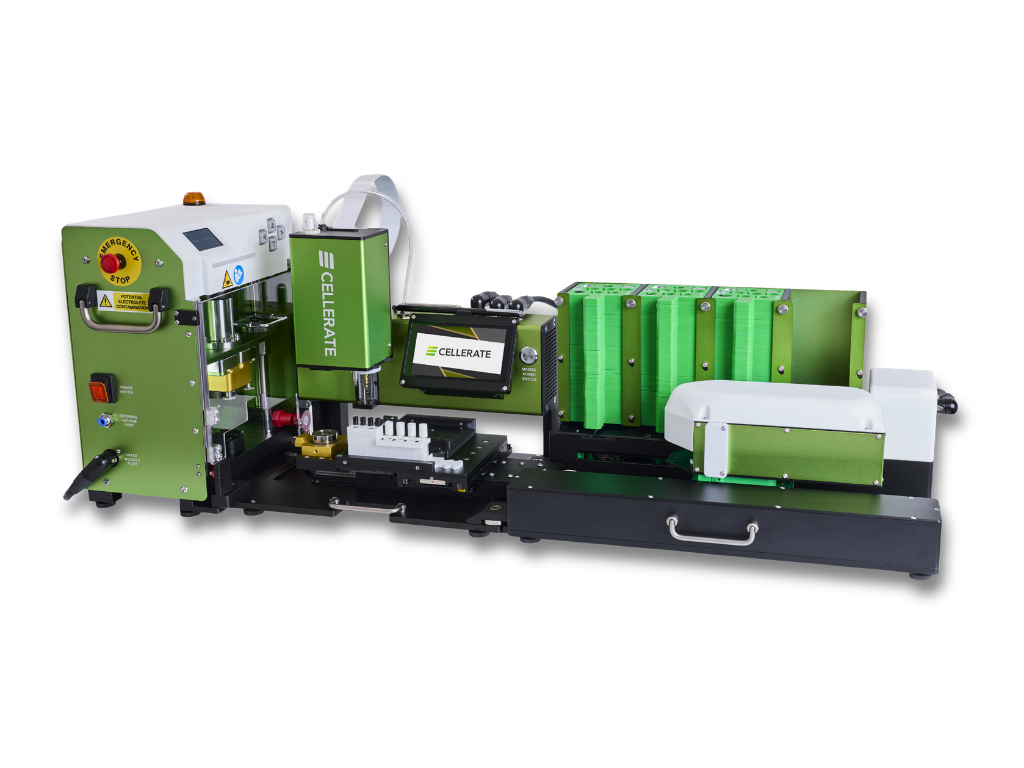
CASS supports automated 5–200 μL dispensing, multi-electrolyte workflows, traceable build logging, and automatic swapping of heads and tips to reduce cross-contamination. That gives formulation teams a much more controlled way to compare solvent systems, additive concentrations, localised high concentration systems, polymer or gel electrolytes, and other evolving electrolyte concepts.

That matters in several ways. First, it supports repeatable dosing across large sets of cells. Second, it allows multiple electrolyte formulations or additives to be programmed into a defined build routine, making systematic formulation sweeps and automated DOE-style studies much easier to run. Third, it reduces the contamination risk that can arise when moving between different chemistries or concentration levels.
Traceability is equally important. Because the effects under study can be subtle, build records and image logging help researchers correlate performance with exact dosing conditions, validate the build history, and remove assembly error as a likely explanation when results differ.

The Protocell ecosystem is especially valuable for more advanced electrolyte studies. Protocells allow direct control over electrolyte volume without the forced flooding associated with conventional coin cells, and they allow stack pressure to be adjusted and measured more directly. That makes them useful for studying lean electrolyte conditions, wetting dynamics, electrolyte depletion, and pressure-sensitive interfacial behaviour without requiring a separate test platform.
The Multi-Functional Press can also support workflows involving polymer or gel electrolytes, especially where lamination, sealing, or related processing steps begin to matter more. The E-PREP also remains relevant where upstream consistency in electrode sampling helps maintain tighter control over the full formulation-testing workflow.
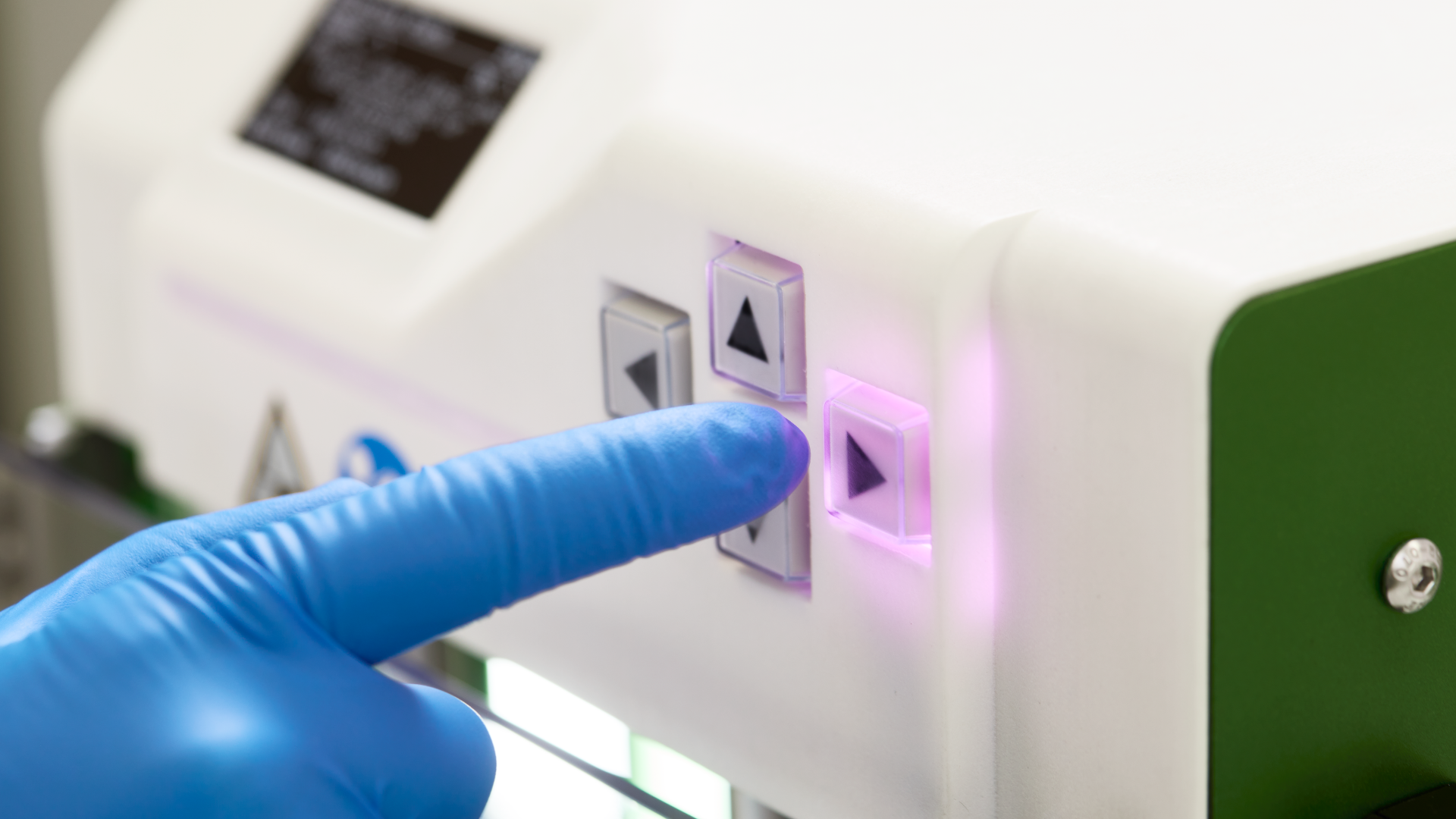
Taken together, these systems give electrolyte researchers a more programmable and better controlled route from manual dispensing to structured, high-fidelity formulation studies.