Protocells

Coin Cells In A Pouch

Test coin cell type electrodes in our new pouch format.

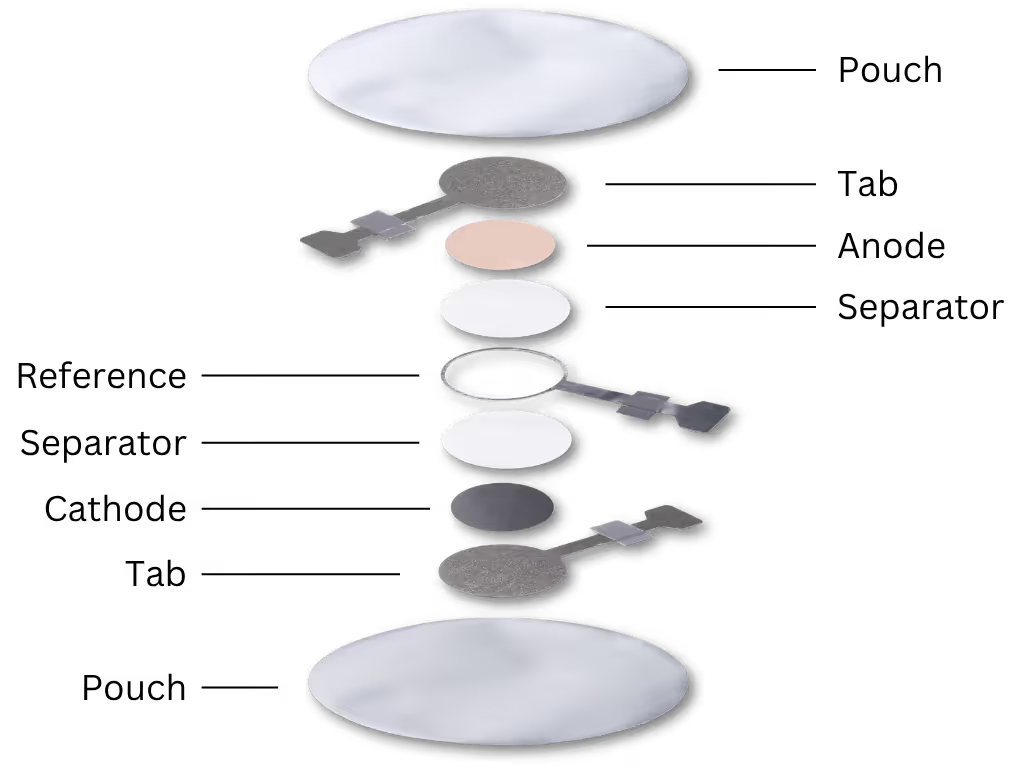
An exploded diagram of a Cellerate Protocell showing each layer in order. From top to bottom: the outer pouch film, a metal tab, the anode disc, a separator, the circular reference electrode with attached tab, a second separator, the cathode disc, another metal tab, and the bottom pouch film.
A cut out image of a protocell
A cut out image of a 2 tab protocell

Coin Cells Were Made for Watches, Protocells Are Made for Research

Protocells enable unparalleled control and accuracy in electrochemical testing. Developed to bridge the gap between traditional coin cells and pouch cells, Protocells allow direct control of pressure and electrolyte volume, whilst also enabling, reference electrode integration, and easy disassembly for post-mortem analysis. 

Cellerate’s Protocell format has been adopted by leading research institutions, and material developers, offering a more representative and scalable testing environment for next-generation battery chemistries.
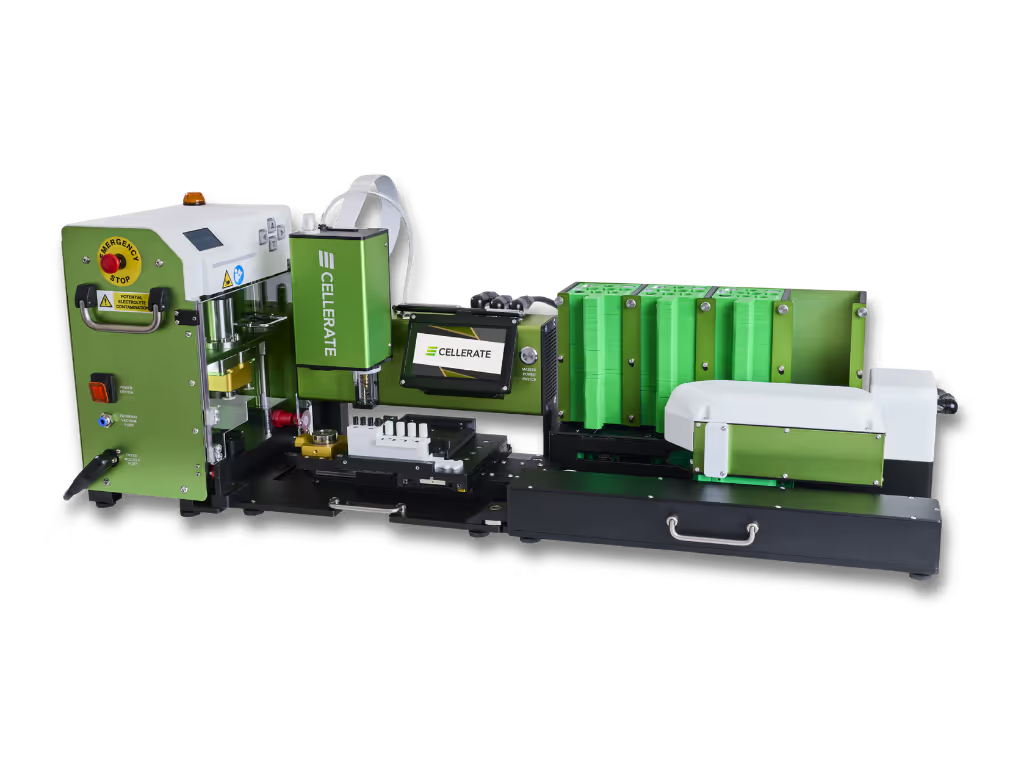
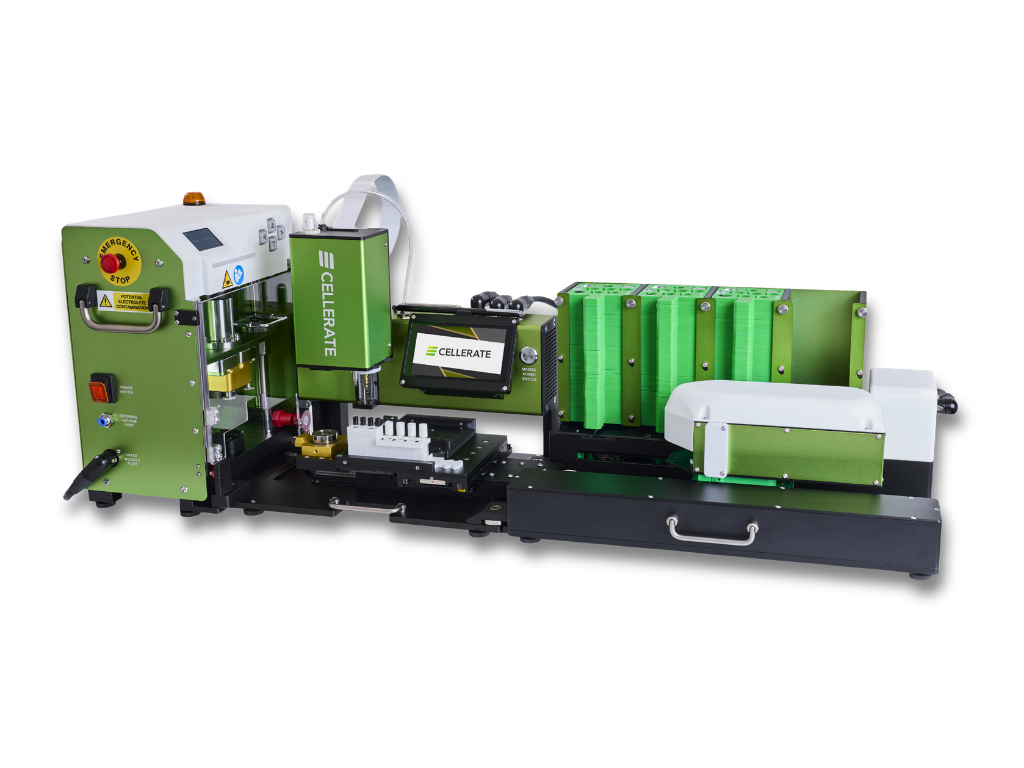
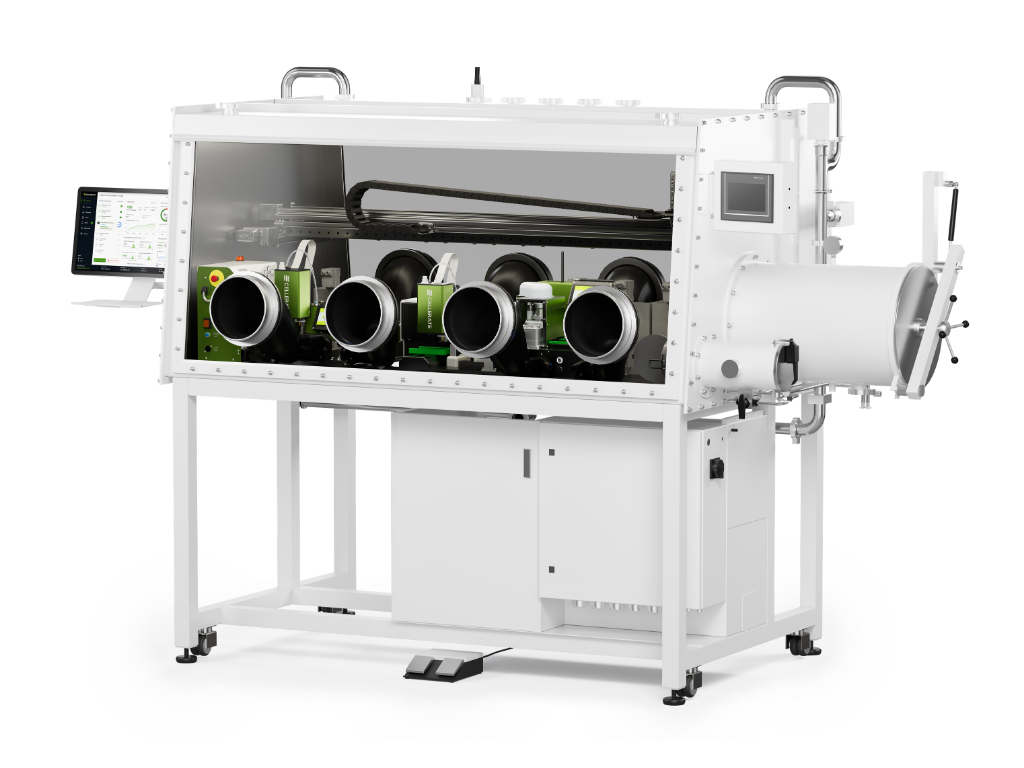
Automatically Assemble Protocells With Our Cell Assembly & Sealing System

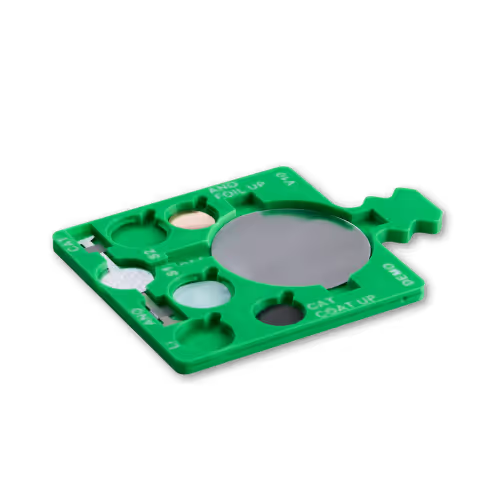
A green tray filled with protocell materials before assembly

Load Protocell Components

Cellerate's automated coin cell assembly system

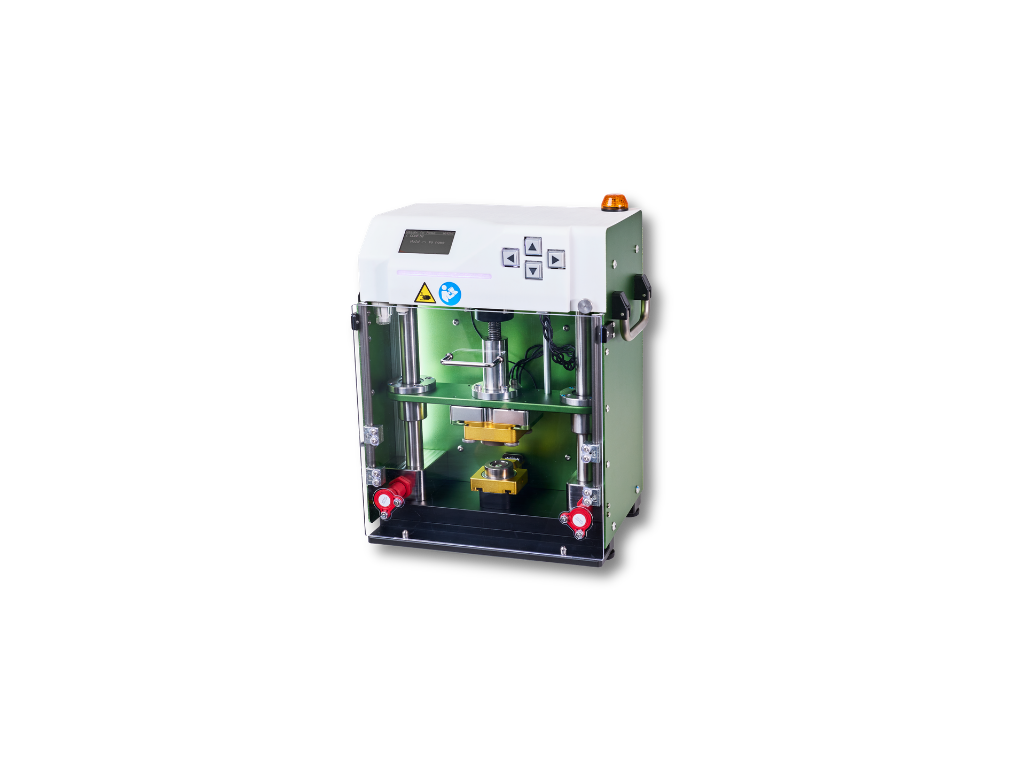
Automatic Protocell Assembly

A green tray with a complete Protocell

Protocells Ready For Testing

Why Protocells?

Protocells are engineered to overcome the inherent limitations of coin cells, offering a superior data-driven approach for evaluating electrode and electrolyte performance. Their pouch-style architecture leads to data that is more representative of the commercial scale, allowing researchers to extract quality insights even with small sample sizes.

Key Research Challenges:

  • How do you test materials under realistic pressure conditions?
  • How do you precisely control electrolyte volume?
  • How do you evaluate each electrode independently with a reference?
  • How do you streamline post-mortem analysis?

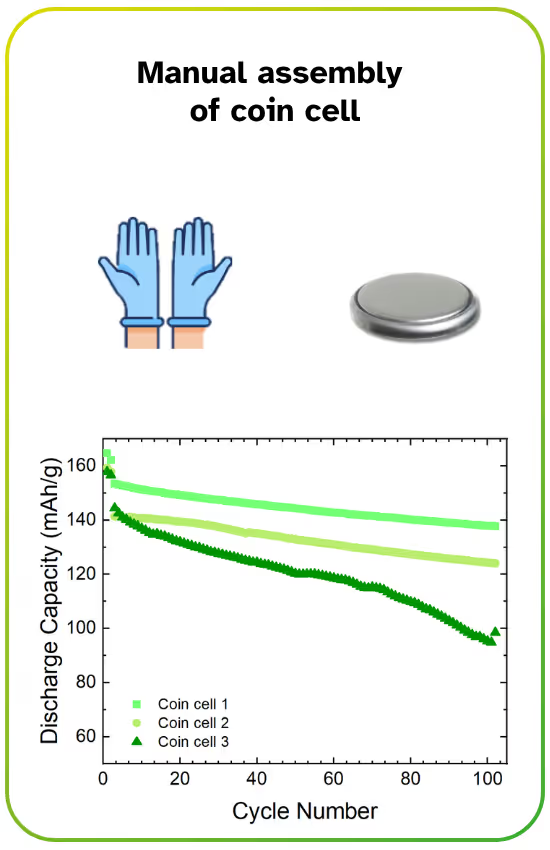
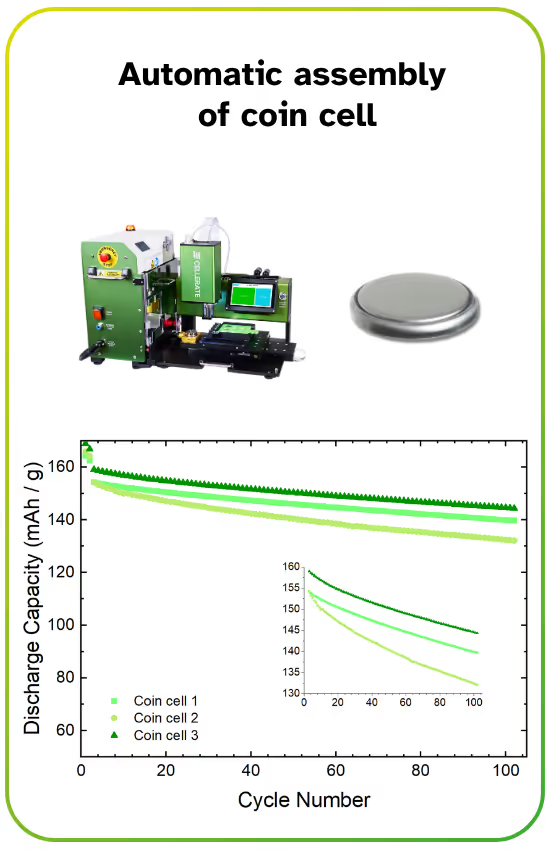
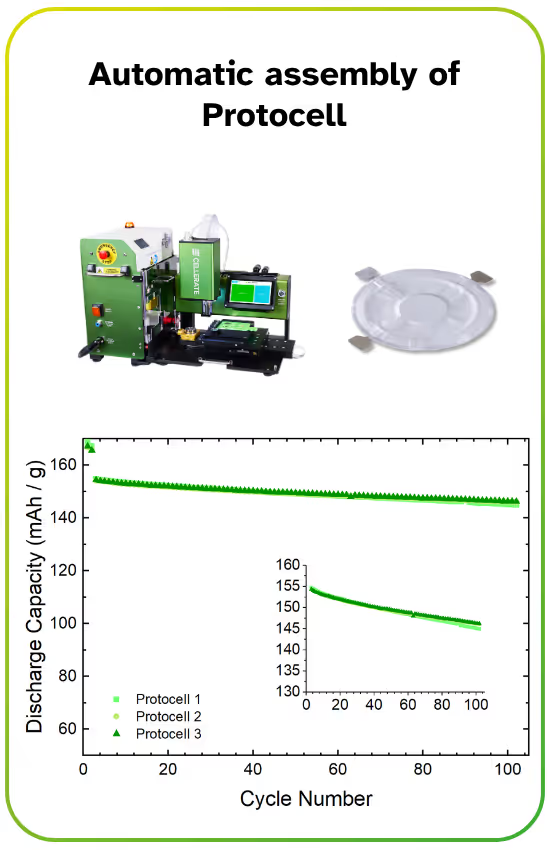
Comparison of Coin Cell vs Protocell discharge capacity

Data from automatic assembly of a coin cell with Cellerate's sytem

Graphite anode (NEI NANOMYTE BE-200E), NMC-622 cathode (NEI NANOMYTE BE 54E), Celgard separator, 1 M LiPF6 in EC:EMC (3:7) + 1wt.% VC [Solvionic]. Both coin cells and Protocells were assembled using the Cellerate CASS to remove the ‘human factor’. Protocells tested under 0.4 MPa stack pressure.

Protocell Technical Specifications

Component Specification
Pouch Material 110 µm laminated aluminium
Electrode Compatibility Standard coin cell-sized electrodes (10 mm – 16 mm)
Reference Electrode Range of materials available. 17 mm ring, 16 mm inner diameter
Separator Size Up to 19 mm
Tabs 17 mm contact area, 0.1 mm thick with hot-melt tape – no tab welding required
Sealing Method Heat-sealed under vacuum
Integration Compatible with Cellerate CASS for automated assembly and sealing

Protocell Test Holders & Pressure Jigs

To maximise the capabilities of Protocells, Cellerate offers a specially designed test holder and pressure jig for cell cycling and other electrochemical tests.

The Protocell Test Holder ensures stable, long-term electrical contact to anode, cathode, and reference tabs for high-accuracy measurements. It connects seamlessly to most standard cyclers and enables 2 or 3 electrode configurations with minimal setup. 

The Protocell Test Holder slots into the Pressure Jig to allow researchers the precise control of the electrode stack pressure, making this ideal for commercially relevant testing, scale-up, and also solid-state battery research.

An image of a Protocell Test holder demonstrating the set stack pressure

Test Holder & Pressure Jig Options

Feature Specification
Electrical connection 4-point Kelvin with reference tab
Stack pressure control 0.05–10 MPa (manual or motorised)
Dilation Measurement Precision 0.05 μm
Contact Stability Designed for reliable long-term testing
Environmental Compatibility Suitable for use inside environmental chambers

A New Benchmark For Coin Cell Research

Protocells combine the simplicity of coin cells with the functionality of pouch cells, giving researchers a test platform that scales with their ambition.

Which Cell Format Is Right For You?

A table showing the pros and cons of a standard coin cell compared to a protocell

Consumables

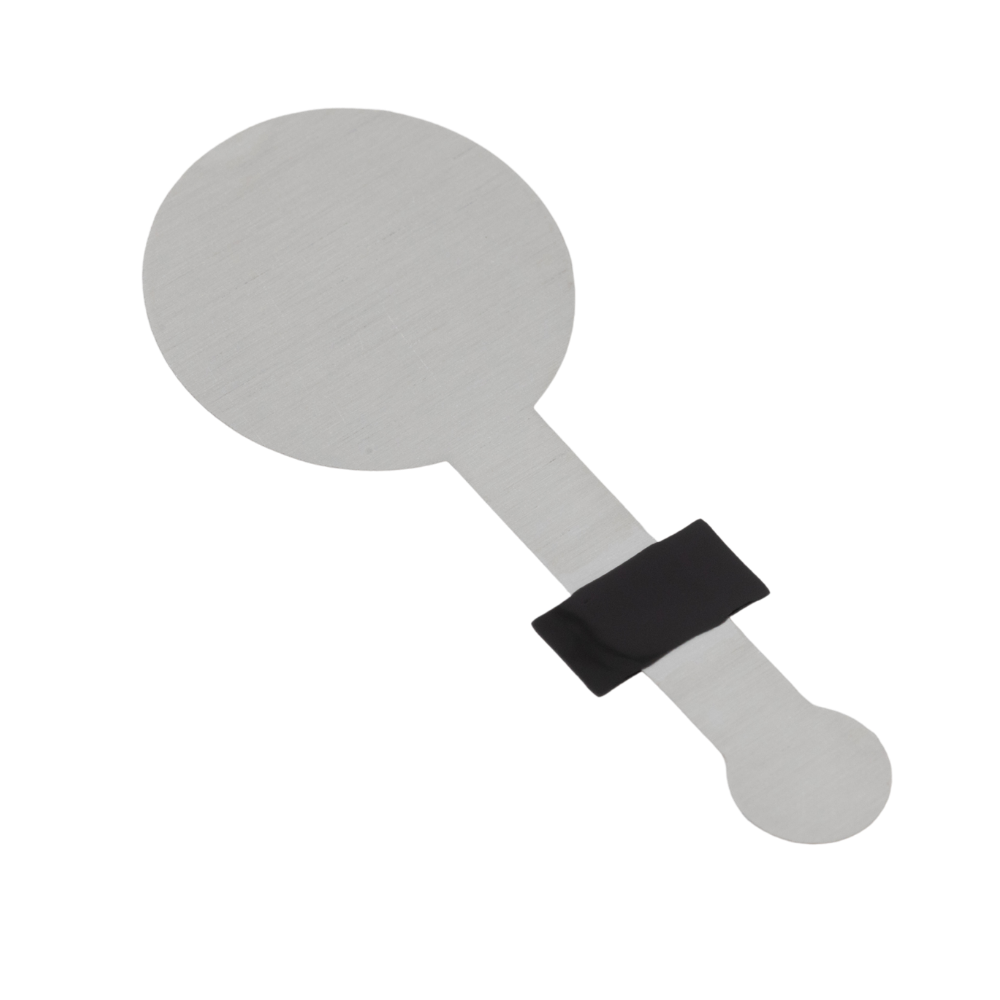
Order Cellerate tabs for Protocell testing

Protocell consumables: a silver ringed tab
Protocell consumables: a copper ringed tab

Discover Our Systems

Cellerate's automated battery cell assmbely system - Cell Assembly & Sealing System

Cell Assembly & Sealing System

Automated assembly of coin cells and single-layer pouch cells for material testing and quality control. Achieve high precision and high throughput cell assembly without spending hours in the laboratory.

Cellerate's automatic pouch cell assembly system, Multi-Layer Pouch Cell Assembly Systems

Multi-Layer Pouch Cell Assembly

This new approach to automatic pouch cell assembly enables rapid reconfigurability, accelerating discovery across R&D and quality control while saving lab space.

Cellerate's automated system for cutting, weighing, and measuring electrodes for coin cells and small pouch cells

Electrode Preparation System

The Electrode Preparation System from Cellerate offers a fully automated solution for cutting, weighing, and measuring electrodes for coin cells and small pouch cells with unparalleled precision.

Scroll to Top

Do you want to find out more about automated battery research?

Explore our latest reports, whitepapers and expert insights into automated battery research and quality control.
Location(Required)