Sodium and Other Non-Lithium Chemistries
Reliable cell assembly for emerging battery chemistries
Work on sodium-ion, lithium-sulfur, metal-based systems, and other emerging chemistries often brings a different set of practical challenges to the cell-building workflow.
The materials can be more reactive, more delicate, and less mechanically forgiving than the systems most standard equipment is designed around. Stack behaviour may be less familiar, handling windows may be narrower, and small inconsistencies in pressure, alignment, or dosing can have a disproportionate effect on the result. In these workflows, it is often difficult to tell whether a poor result comes from the chemistry itself or from the way the cell was assembled.
That matters because early work on new chemistries already carries enough uncertainty of its own. When researchers are trying to understand unfamiliar behaviour, the assembly process needs to be as stable as possible. Otherwise, experimental noise can quickly become confused with genuine chemistry effects.
This is also an area where researchers are often used to adapting general-purpose methods to fit unusual requirements. They are not always expecting an off-the-shelf system to suit the work without compromise. What matters is a workflow that can handle delicate materials with enough control and repeatability to remove assembly as a major source of variation.
Cellerate equipment is designed to support that kind of work. It gives teams exploring next-generation chemistries a more stable and repeatable way to build cells, helping them isolate chemistry problems from assembly problems and move through early development with greater confidence.
Built for more demanding materials
Emerging chemistries tend to place more weight on careful handling. Small changes in electrode alignment, electrolyte addition, or cell stack pressure can have a larger effect than they would in more familiar systems. That makes repeatability harder to achieve manually and increases the risk of failed cells when precision is not tight enough.
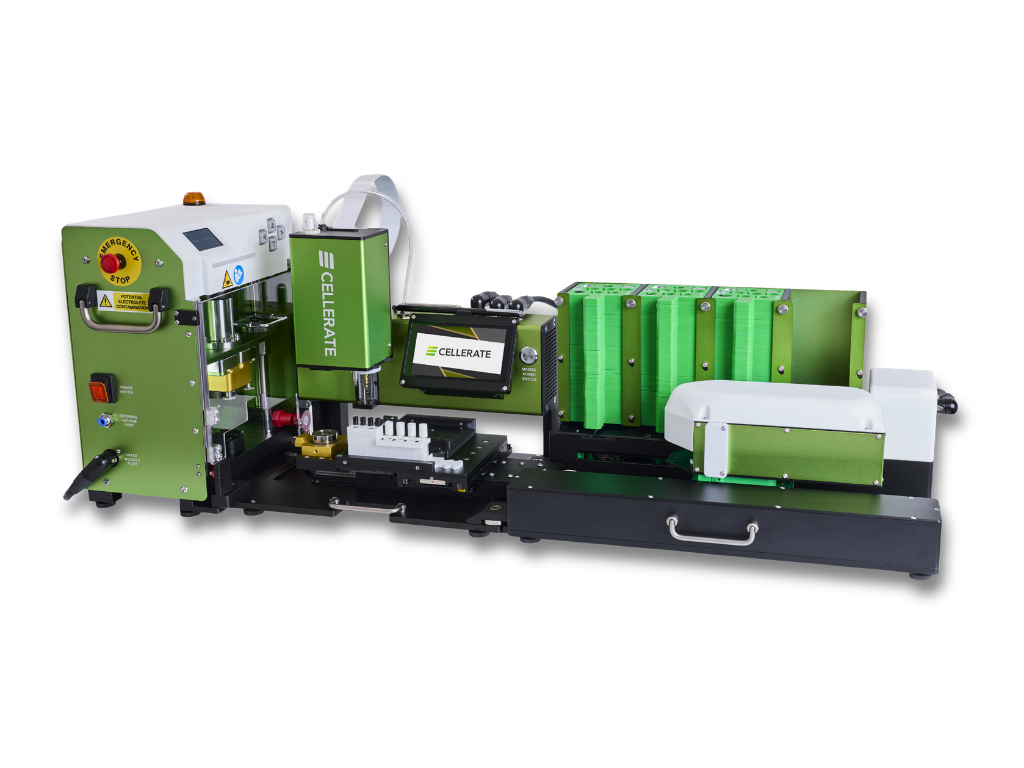
CASS supports automated assembly of coin cells and Protocells (our single-layer pouch format) with controlled robotic handling, machine vision alignment, and traceable build logging. The system is also compatible with pure sodium metal electrodes for half-cell configurations, as well as curved and delicate materials that can be difficult to handle consistently by hand.

That level of control is valuable when researchers are working in chemistries where the materials themselves are already less predictable. By reducing operator-dependent variation, CASS helps ensure that differences in performance are more likely to reflect the chemistry under investigation rather than inconsistencies in the build.
The Protocell ecosystem can be especially useful here. Protocells allow direct pressure control, controlled electrolyte volume, and reference electrode integration, which can be helpful where stack mechanics, interfacial behaviour, or electrolyte sensitivity matter more than they do in standard lithium-ion coin cell work.

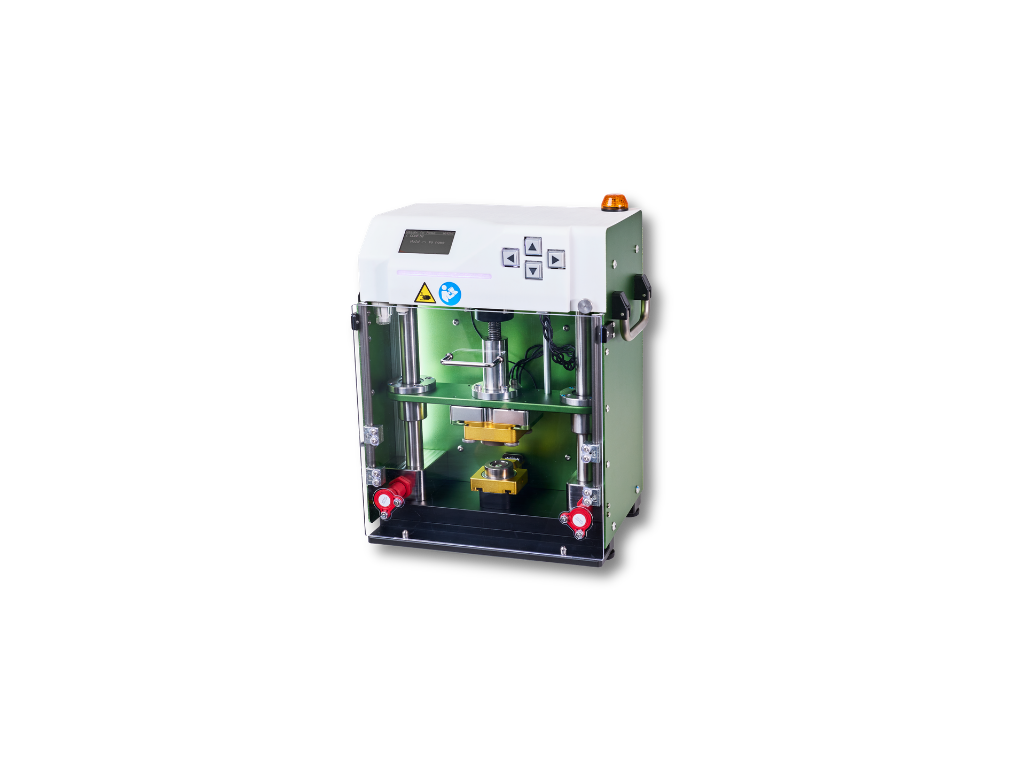
The Multi-Functional Press is also relevant where these chemistries begin to require more deliberate lamination, sealing, or pressure-related process control. As workflows move towards more advanced stacked formats, the Straight Stacking System provides a more repeatable route for layer handling and stack formation where manual methods become too variable.
Taken together, these systems help reduce experimental noise in emerging chemistry programmes and provide a more dependable platform for work that is already technically demanding.