High Throughput Testing & Design
Reliable cell assembly for large, structured test programmes
In high throughput testing, the challenge is not simply building more cells. It is building more cells in a way that still produces a dataset that can be analysed with confidence.
Large batches, controlled parameter sweeps, and rapid screening programmes all depend on consistency. If cells are built quickly but the variation between them is poorly controlled, then the value of the dataset starts to fall. In these workflows, speed only matters when it is paired with repeatability.
That becomes even more important when the aim is to compare many conditions at once. In Design of Experiments workflows, each cell may represent a deliberate change in material, electrolyte formulation, additive level, pressure, or assembly parameter. The goal is not just to make cells efficiently, but to generate structured variation that can be analysed using established statistical methods. That requires a workflow that is programmable, stable, and able to run with minimal supervision.
Manual assembly makes that difficult. It limits batch size, introduces user-dependent variation, and makes overnight or unattended operation impractical. As the number of variables increases, so does the risk that handling differences begin to blur the result. Where electrolyte formulations are part of the study, manual preparation and dosing can make it harder to maintain control across a full test matrix.
Cellerate equipment is designed to support this kind of testing. It gives teams a way to build larger numbers of cells with controlled variation, reduced supervision, and the consistency needed to make high throughput datasets genuinely useful.
Built for repeatable variation at speed
High throughput workflows depend on two things at once: scale and control. It is not enough to increase output if the process becomes less consistent as volume rises. The same build quality needs to hold across large batches, including where individual cells are intentionally different from one another.
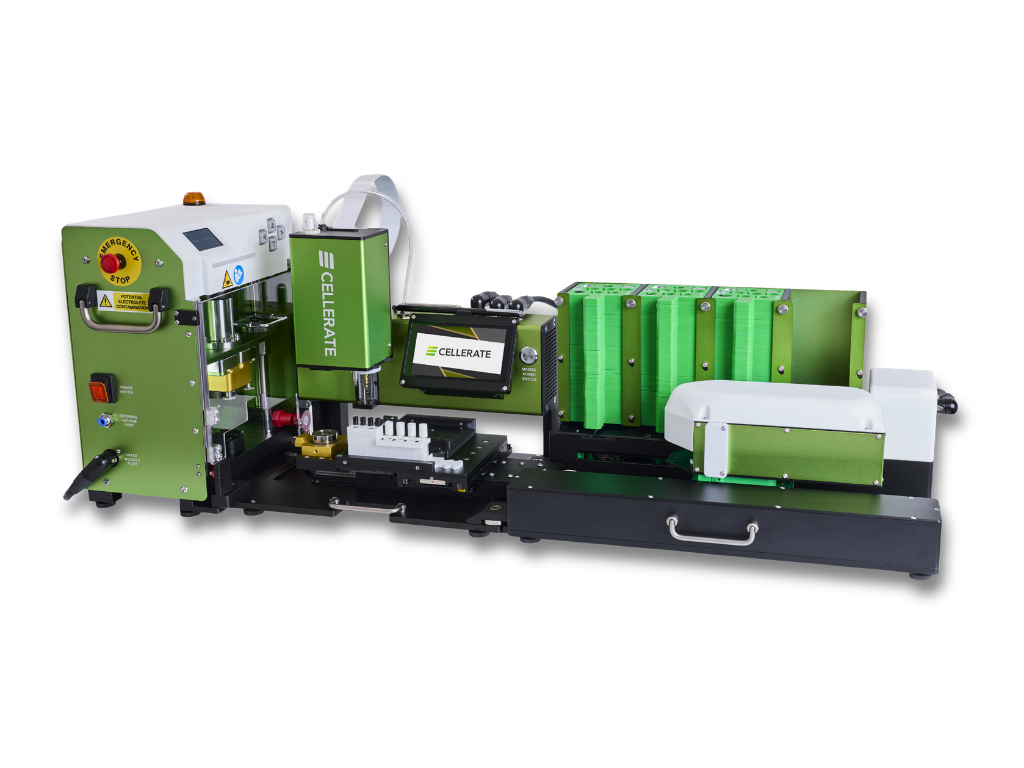
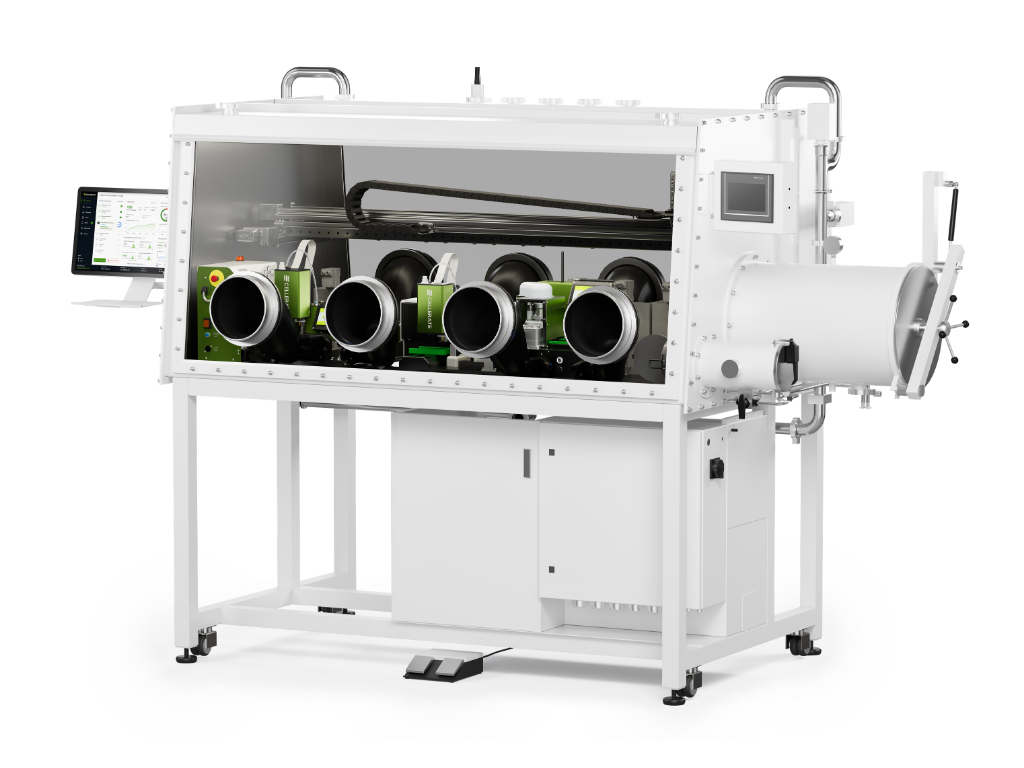
CASS is designed for that kind of work. It supports automated assembly of coin cells and Protocells (our single-layer pouch format) with controlled robotic handling, machine vision alignment, and traceable build logging.

High throughput testing is often limited less by build time alone than by the amount of skilled attention required to sustain it. By reducing supervision and standardising the assembly process, teams can produce larger datasets without scaling labour in the same way.
Just as importantly, the workflow allows controlled variation between cells. Different cells can be assigned different build parameters, and the system’s multi-vial workflow supports automated liquid mixing with reduced cross-contamination risk. This makes it well suited to DOE-style testing, screening campaigns, and statistically driven materials or process studies where the relationship between variables matters as much as the result of any single cell.
Repeatability remains central here. Cellerate-built cells have been associated with strong consistency across users and low variation in controlled datasets, including standard deviations of around 0.2–0.3% in customer data. That helps ensure that trends observed across a test matrix are more likely to reflect the intended variables rather than differences in handling.

The richness of the build data also matters. CASS logs the build of every cell with image-based traceability and automatic build quality reporting, giving teams much more visibility into the assembly process than they would usually have with manual assembly.
E-PREP supports the same objective earlier in the workflow. High throughput programmes depend on consistency in sample preparation as well as assembly, so automated electrode cutting and characterisation help reduce variability before the cell is built.
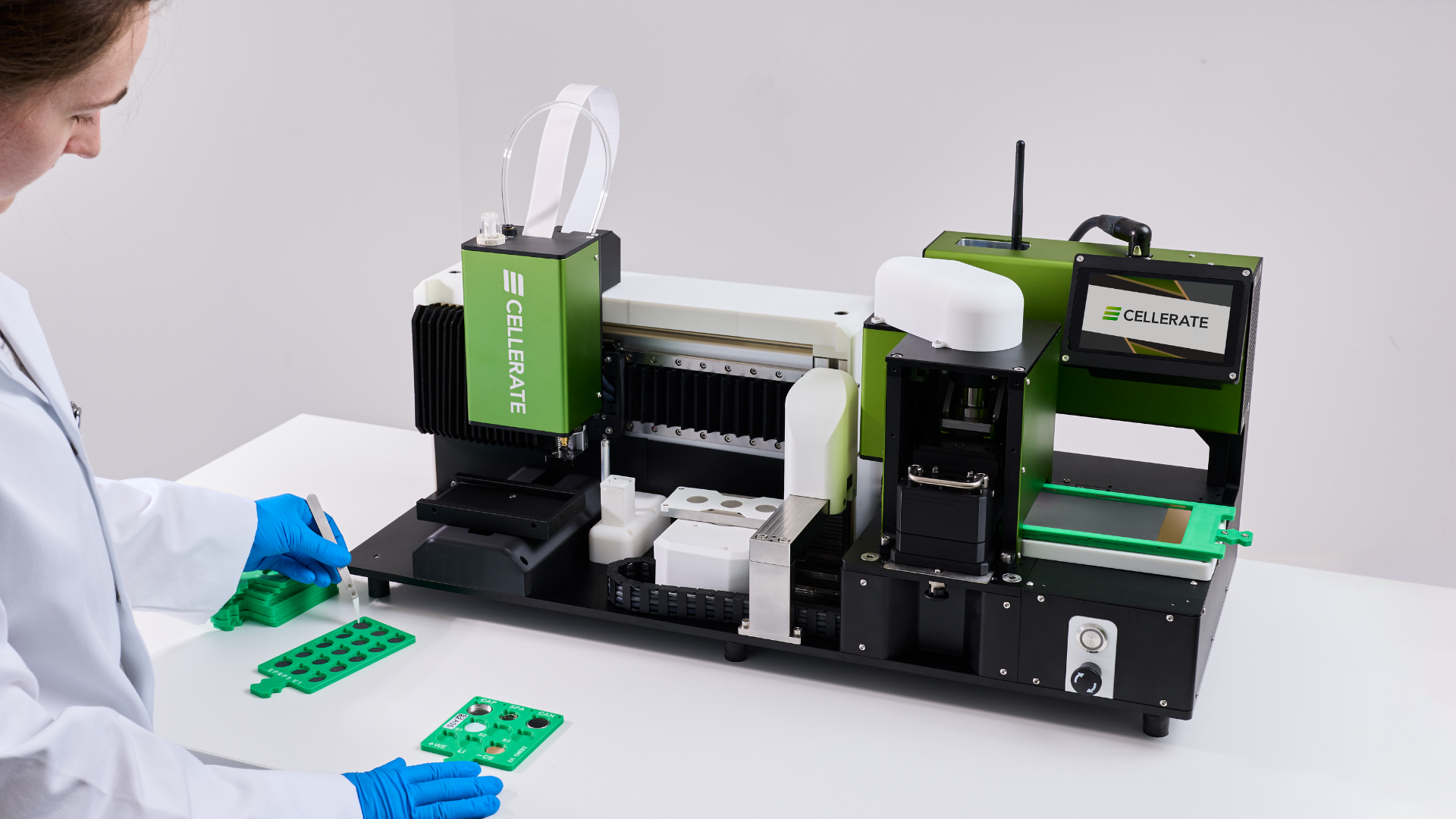
The Protocell ecosystem can also be relevant where screening programmes need to include stack pressure control or reference electrode capability, acting as a more informative test format without the levels of material waste associated with larger cells.
Taken together, these systems give high throughput teams a way to move from manual batches to structured, programmable cell production, where speed supports better experimentation rather than compromising it.