Materials Screening for AI & Machine Learning
Reliable cell assembly for AI-ready battery datasets
AI-driven battery research depends on more than large numbers of samples. It depends on large numbers of samples that are consistent enough, traceable enough, and well described enough to be useful for model training.
If the dataset is noisy, incomplete, or poorly structured, the model learns the wrong things. Small inconsistencies in assembly, missing metadata, or untracked build differences can weaken pattern recognition, reduce predictive value, and make it harder to distinguish signal from noise. In these workflows, traceability matters as much as throughput.
That is because AI and machine learning programmes are not only looking for better averages. They are looking for relationships that are difficult to see directly, such as interactions between material choices, electrolyte composition, assembly conditions, and test outcomes that may not be obvious from conventional analysis alone. To support that kind of work, the cell-building workflow needs to produce not only cells, but structured data with a clear ontology and consistent metadata.
Manual assembly is a poor fit for that requirement. It introduces uncontrolled variation, captures very little metadata, and makes it difficult to scale to the sample counts needed for useful training sets. Even where output can be increased, the lack of build-level information can still limit the value of the dataset.
Cellerate equipment is designed to support this kind of programme. It gives teams a way to build large numbers of cells with controlled variation, structured build records, and a much richer layer of assembly data than would normally be available from manual cell production.
Built for structured data generation
For AI and machine learning workflows, the value of automation lies partly in throughput, but more fundamentally in the quality of the data generated around the cell.
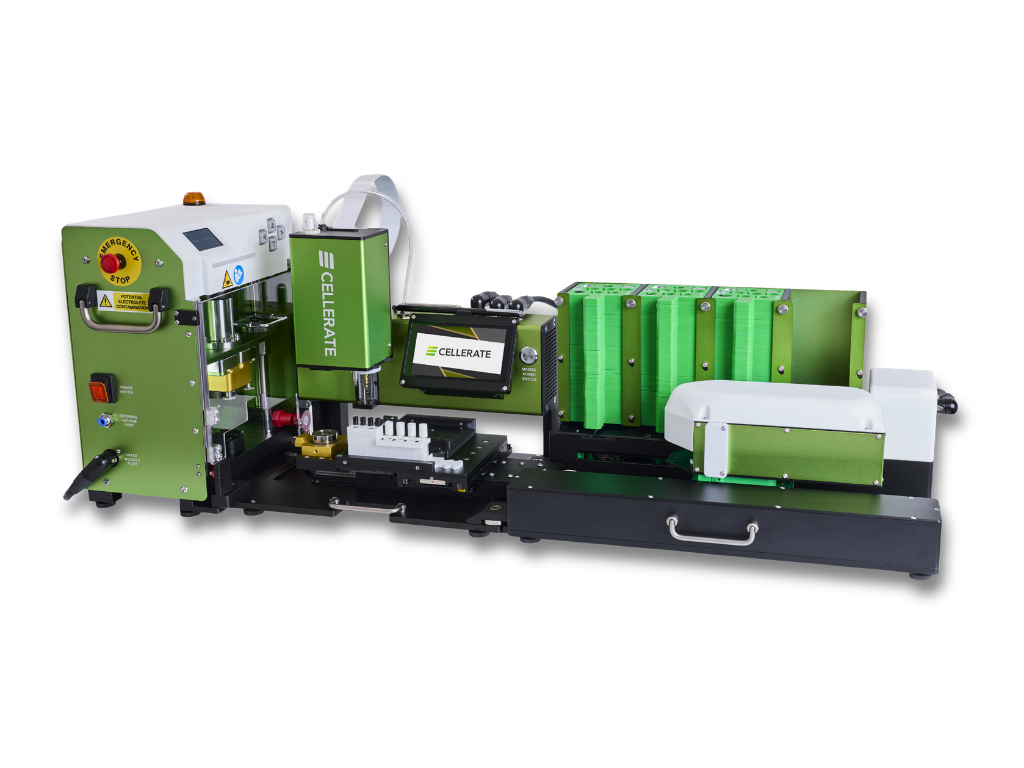
The CASS supports automated assembly of coin cells and Protocells (our single-layer cell format) using controlled robotic handling, machine vision alignment, automated liquid handling, and build logging. It also supports remote control and database interaction.

That matters because model-driven research depends on consistent execution across large sample sets. If one part of the workflow drifts between users, days, or batches, that variation can become embedded in the dataset and reduce model performance. By standardising the assembly procedure, CASS helps teams generate cleaner input data for AI-led analysis.
The ability to create controlled variation between cells is equally important. In AI-driven materials screening, each cell may represent a different material, additive level, electrolyte composition, or assembly condition. CASS supports multi-vial workflows and unique builds per tray, making it possible to generate large sets of distinct cells rather than large sets of nominally identical ones. That is especially useful where electrolyte formulations vary from cell to cell as part of the build plan.
Metadata richness is another key difference. CASS captures image-based process records and build logs for every cell, providing more information about what happened during assembly than is typically available from manual workflows. That makes the system useful not only as assembly equipment, but as part of a structured data pipeline.
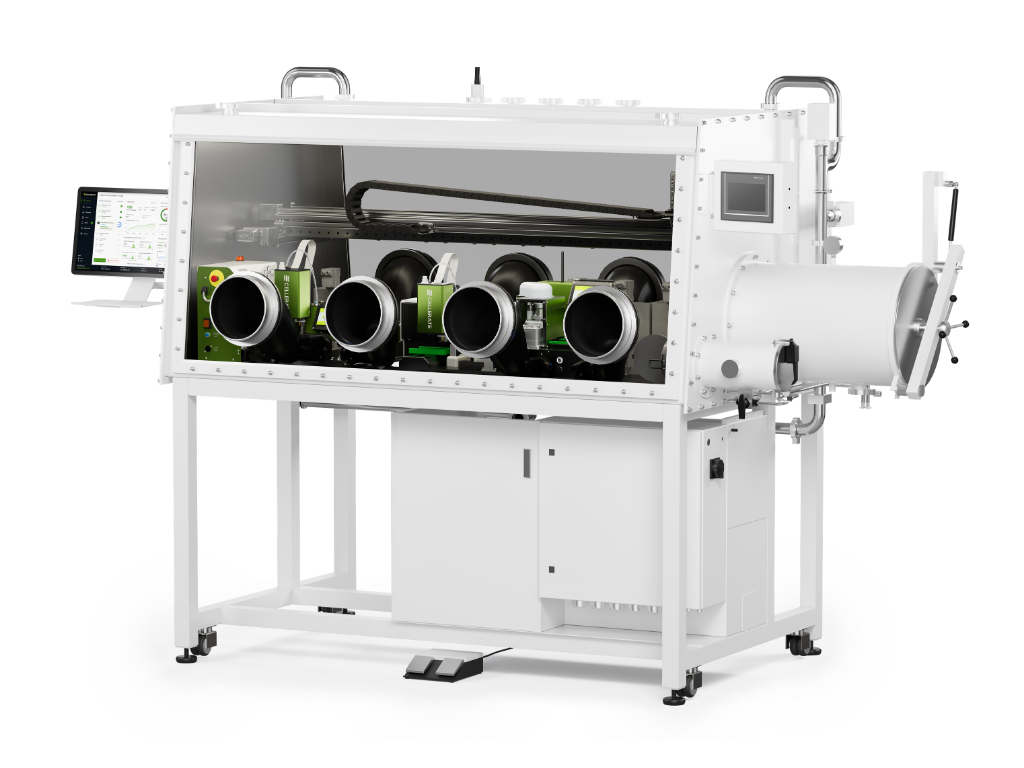
For larger programmes, CASS-IQ extends the same approach beyond standard bench workflows. It is designed for higher-output automated production with reduced manual handling, tailored to workflows from electrode foils or sheets through to finished cells, and aimed at generating the large, consistent datasets needed for large research programmes, AI-ready data generation, and quality control.
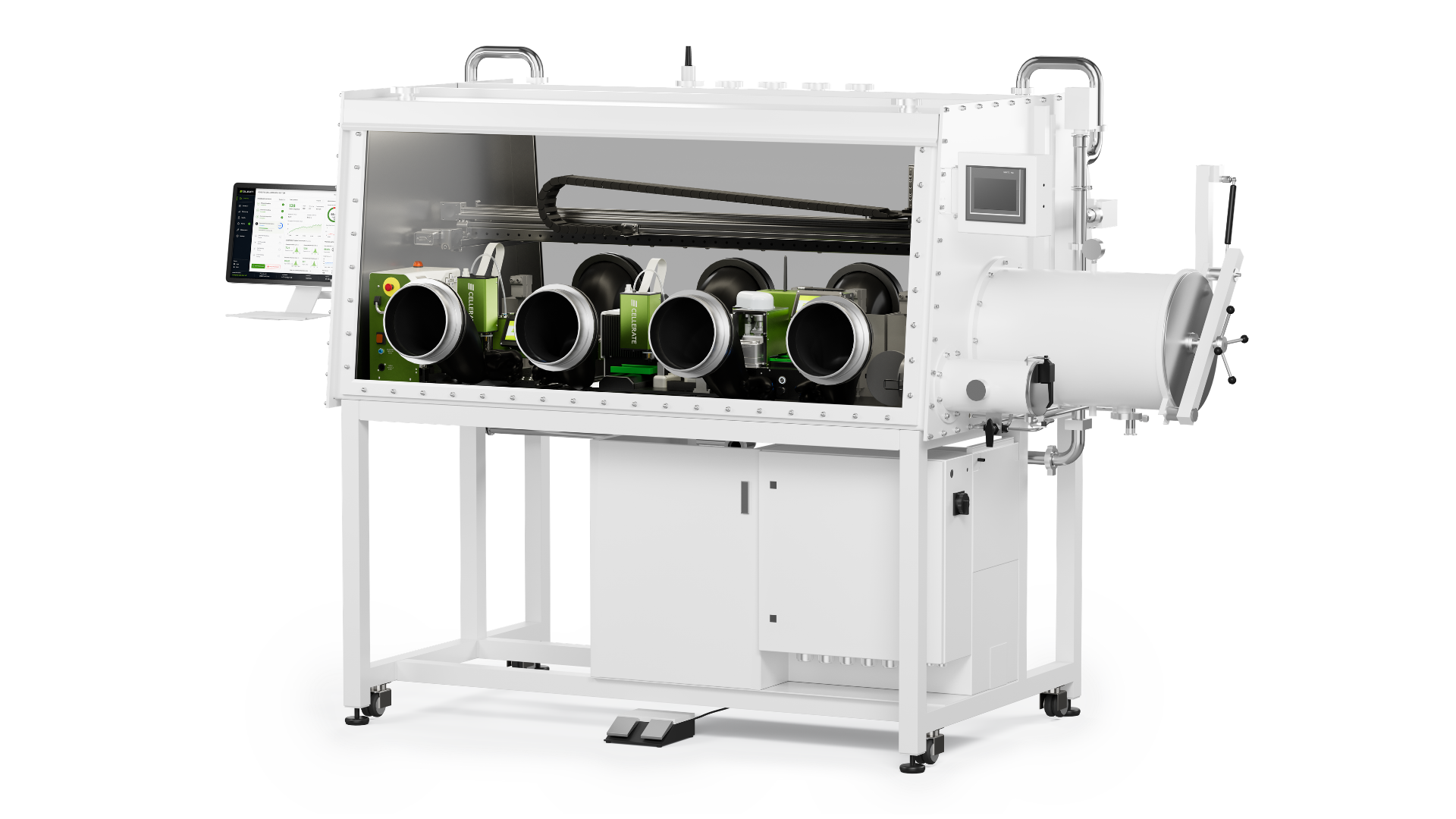
This is closely aligned with the direction of AI-enabled battery research platforms such as FULL-MAP, which is a materials acceleration platform for sustainable batteries using AI-powered platforms, high-throughput testing, and autonomous synthesis. Cellerate’s role in FULL-MAP is framed around automation within that wider AI-driven workflow.
The E-PREP supports the same requirement upstream. AI workflows benefit from consistency in sample preparation and access to structured measurements before assembly, and E-PREP is designed to cut samples from coated sheets while automatically capturing the metrics needed for volumetric and gravimetric calculations.
The Protocell ecosystem can also be relevant where the training set benefits from additional observables, such as pressure-controlled behaviour or reference electrode data. The Protocell platform adds direct pressure control, controlled electrolyte volume, and reference electrode compatibility while remaining compatible with automated CASS workflows.

Taken together, these systems help turn cell assembly from a largely manual lab task into a more structured source of battery research data; one that is much better suited to AI and machine learning workflows.