Solid-State Battery Development
Reliable cell assembly for solid-state cell development
Solid-state battery development places unusual demands on the cell-building workflow. Pressure, alignment, interfacial contact, and the handling of brittle or delicate layers can all affect the result as much as the chemistry itself.
Researchers working with solid-state systems already know that small changes in stack formation, compression, or processing route can change the behaviour of the cell enough to complicate interpretation. In a field where interfacial resistance, densification, and contact quality are often central challenges, mechanical consistency matters.
The difficulty is that there is still little standardisation across the field. Different labs are working with different materials, different pressures, different layer structures, and different routes to cell formation. Sulfides, oxides, polymers, and hybrid systems each bring their own handling and processing challenges, and many teams are still building workflows around highly specific technical requirements.
Cellerate equipment is designed to be useful in that environment. It gives solid-state teams a more controlled and repeatable basis for stack formation, pressure-sensitive testing, and layered cell development, while also providing a practical starting point for more bespoke workflow integration where needed.
Built for pressure-sensitive and evolving workflows
Solid-state development often depends on repeatable pressure conditions and careful control over the stack before the cell is sealed. That is where manual methods can become limiting.
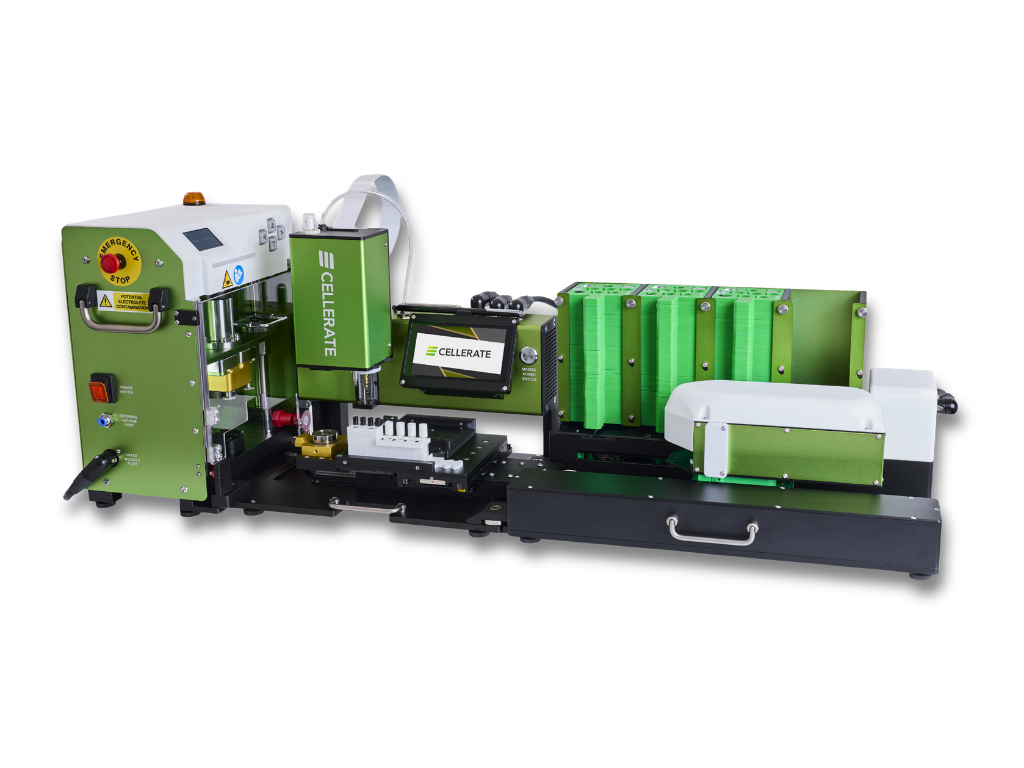
CASS supports controlled assembly of coin cells and Protocells with machine vision alignment, traceable build logging, and repeatable handling of small-format components. That helps reduce variation in placement and build sequence at a stage where small mechanical differences can have a large effect on the result.
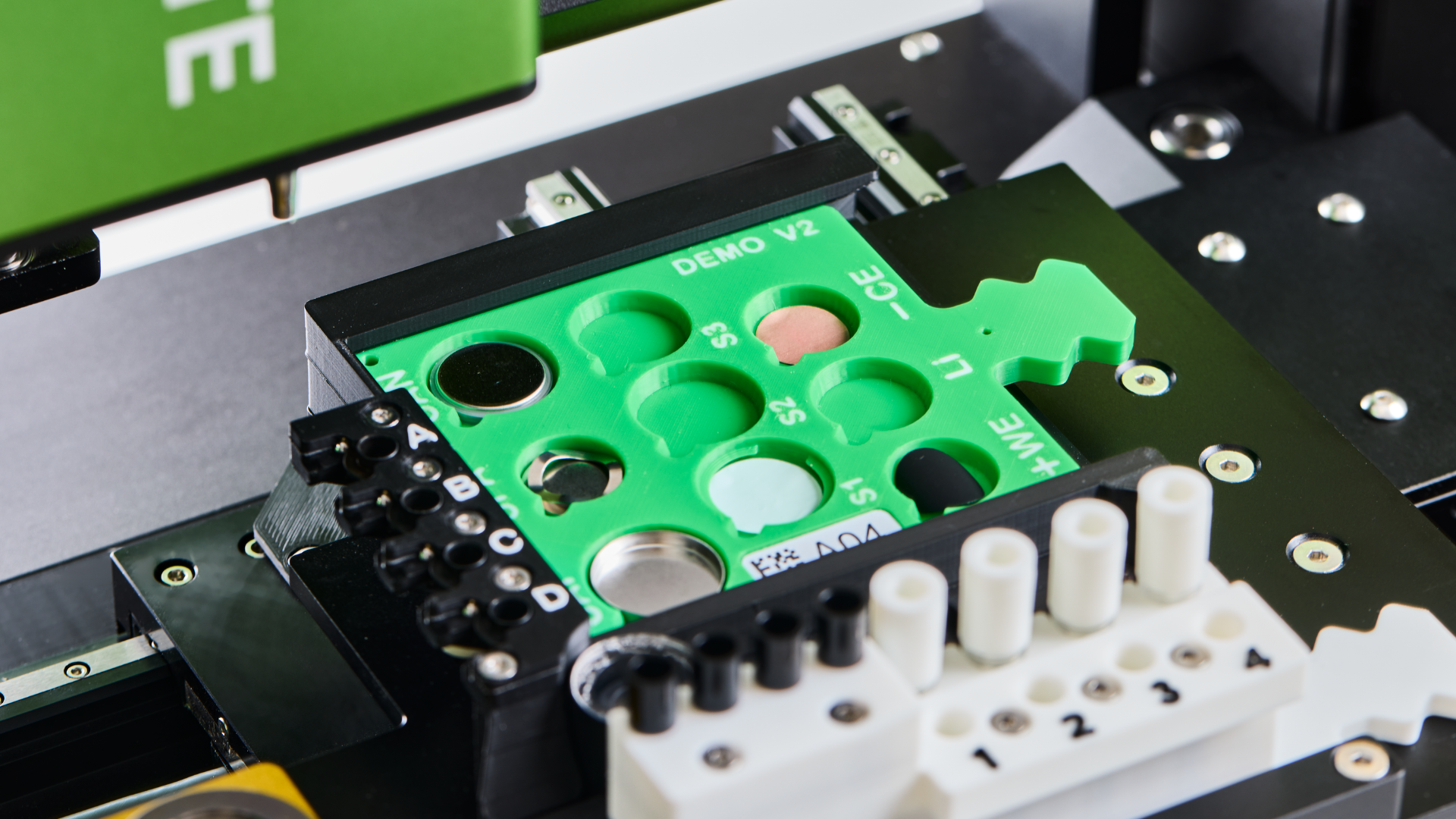
The Protocell ecosystem is especially relevant here. Protocells allow direct pressure control and reference electrode integration, making them well suited to work where compression effects, interfacial resistance, and other mechanically sensitive behaviours need to be studied more closely.
E-PREP can support the same objective further upstream where tighter control over sample cutting and characterisation helps create more consistent inputs for solid-state testing.
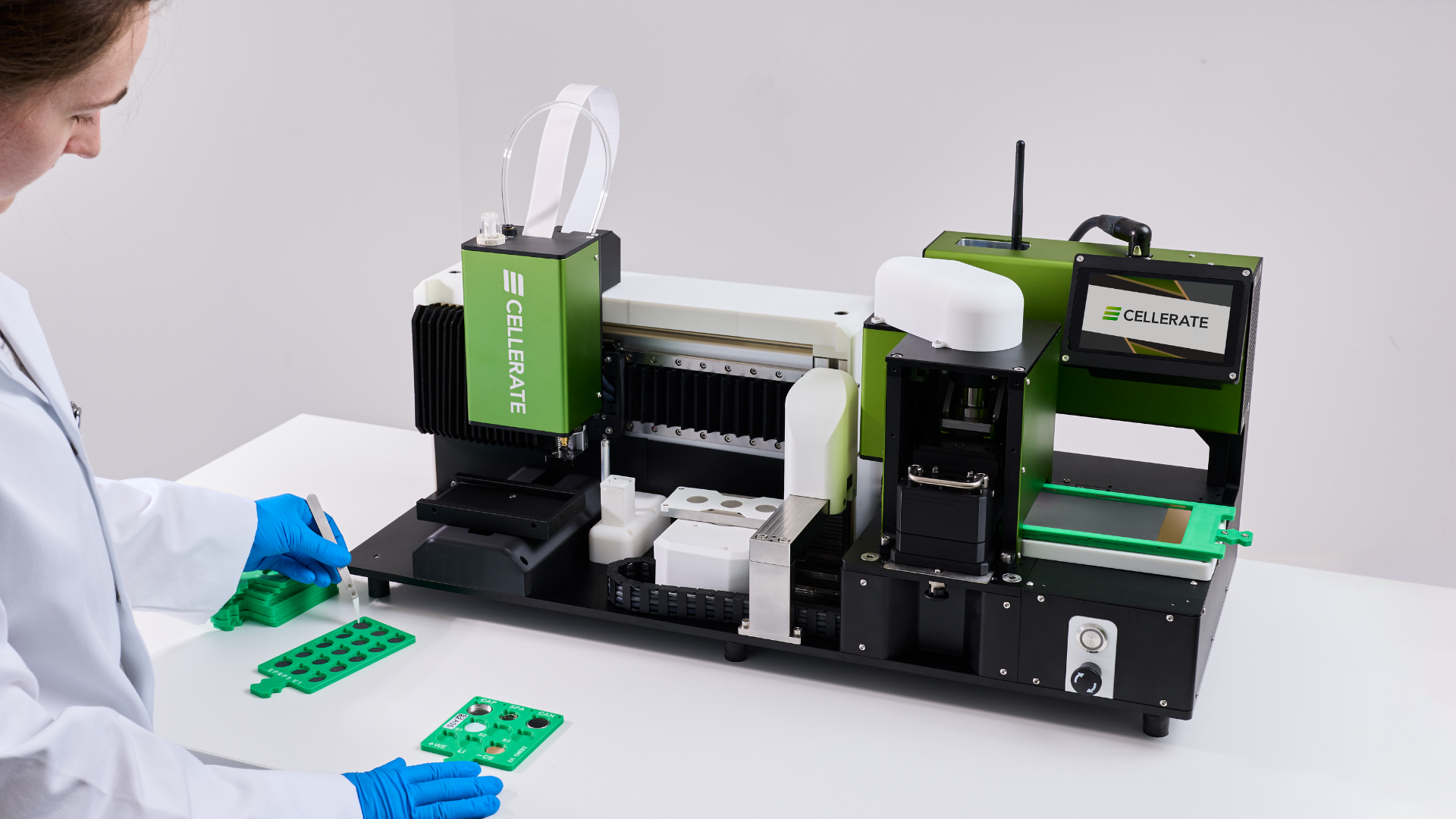
As workflows move towards multi-layered and more application-relevant designs, the Multi-Functional Press and Straight Stacking System become increasingly important. They support more deliberate control over lamination, pouch forming, sealing, and repeatable stack formation in a way that is better suited to developing structured solid-state workflows than purely manual methods.
Taken together, these systems help solid-state teams reduce assembly-related variability and bring more consistency to a research area where standard workflows are still evolving.
Working around the challenges of different solid electrolytes
Different solid-state electrolyte families create different process constraints.
Sulfide systems can offer high ionic conductivity and good deformability, but they are highly moisture-sensitive and place tight requirements on atmosphere control and interface handling. Oxide systems are more chemically stable, but brittleness, poor contact, and densification requirements make processing more demanding. Polymer and hybrid systems are often more compliant and easier to process, but they bring their own trade-offs in conductivity, stability, and temperature dependence.

That is why solid-state development often benefits from a mix of standard tools and tailored integration.
If your workflow depends on pressure control, inert handling, densification, or specialised layer formation, get in touch to discuss how Cellerate systems can be integrated into a wider solid-state process. This may include work around isostatic pressing or bespoke approaches suited to sulfide, oxide, polymer, or hybrid electrolyte systems.